The Microbiome Management seriesPillar 1 of 613 minute read
Most horse owners who find this page have already tried something. A different hay. A probiotic. A hindgut buffer with a convincing label. Sometimes it worked, for a while. The manure firmed up, the coat came through, and then, a few weeks later, the old pattern crept back and nobody could say why.
That last part is the question worth sitting with. Most advice answers “what should I add?” It rarely answers the question that comes before it: what conditions is your horse’s digestive system working with every day, and why do they keep changing?
At Humequine, Microbiome Management is our name for a way of thinking that starts with that second question. It brings forage, water, routine, microbial biology and careful observation into one framework, with Digestive Stability as the goal.
You do not need to become a microbiologist to use it. You need a clearer picture of what you are supporting, which decisions influence it, and what real progress looks like in the horse in front of you.
What is Microbiome Management?
Microbiome Management is the practice of supporting the environment inside the gut so beneficial microbial communities have the conditions they need to thrive, stabilize and do their work.
The Microbiome Management Framework is Humequine’s way of organizing that practice. It draws on established equine biology and gives owners a way to connect what they do at the feed room door with the living ecosystem inside the horse.
The Microbiome Management Framework
- Support the biological environment
- Support the microbiome
- Support Digestive Stability
- Support whole-body condition and resilience
The stages are a way of thinking, not a conveyor belt. In a living horse, microbes respond to their surroundings, their activity changes those surroundings, and the horse’s diet and physiology shape both.
Before you decide what to add, the framework asks you to consider the setting that addition will land in. It also gives familiar habits, such as planning a hay transition, a place in the bigger picture.
Why the horse’s microbiome deserves attention
The horse is a hindgut fermenter. Microorganisms in the cecum and large colon break down fibrous plant material through fermentation, producing volatile fatty acids that the horse absorbs and uses for energy. A large share of what your horse gets from hay and pasture is therefore made by microbes, not by the horse.1
The community is also more complicated than a list of helpful bacteria. When researchers mapped the digestive tracts of healthy horses region by region, they found distinct microbial communities in different parts of the gut. What lives in the stomach is not what lives in the colon, and a fecal sample describes the end of the line rather than the whole system.2
For an owner, the lesson is that supporting digestion means paying attention to a system. An ingredient can have a role inside that system, but its name on a label does not tell you what this horse needs or what to expect.
What we mean by the gut environment
“Environment” sounds abstract until you connect it to feeding and daily care. Inside the digestive tract it means the food available to microbes, water, acidity, and the products of digestion and fermentation, all of which differ from one region of the gut to the next.1,2
Outside the horse, you make decisions that change what enters that environment. A new load of hay, a change in turnout, or a different feeding schedule is a change in conditions, whether or not anyone planned it that way.
What you decide
- Which hay, and when a new load starts
- The feeding schedule
- Turnout and grazing
- Water, at home and away
- Travel, routine and barn moves
What the microbes live in
- The food available to them
- Water
- Acidity
- The products of digestion and fermentation
The research here is more specific than most owners realize. In one study, ponies were switched abruptly from pasture to hay and back again over two 14-day periods. Their fecal microbiota shifted within the first few days of each change, and the direction of the change mattered: moving from hay onto grass looked like the riskier transition for gut disturbance.3
That does not mean every microbial shift is harmful, or that one ideal community exists for all horses. It does mean the conditions you set are a variable the microbes answer to, quickly.
This is why we ask about conditions rather than assuming one particular bacterium is missing. The better question: what changed, what is the horse receiving, and what deserves a closer look?
The four stages of the framework
Stage 1: Support the biological environment
Begin with what is already in place. Is the forage right for this horse? How are changes introduced? Is water reliably available? What happens to the routine when the horse travels or moves barns?
Forage should reflect the individual. A growing youngster, an easy keeper and a horse in steady work have different needs, and hay analysis tells you what a bale actually supplies rather than what it looks like it supplies.4
Water deserves the same scrutiny. Reliable access to fresh, clean water is a baseline requirement, and drinking often drops away from home, at shows and during transport.5
The aim at this stage is to make the conditions explicit. Sometimes the next step is a conversation about the ration. Sometimes it is checking whether the routine on the ground matches the plan on the feed-room wall.
Stage 2: Support the microbiome
This stage brings microbial function into the feeding conversation instead of treating it as a separate topic that a supplement handles on its own.
The dietary transition research shows that microbial communities answer to what horses eat.3 That makes the diet part of the microbiome conversation, not the background a supplement works against.
Carbon belongs here, and it needs precision. Forage already supplies plenty of carbon-containing material, so “contains carbon” tells you nothing on its own. The useful question is which carbon compounds actually reach the hindgut. When Humequine says bioavailable carbon, it means something specific: the carbon held in humic and fulvic acid, the same carbon compounds found in nutrient-rich soil. That distinction, between carbon that is present and carbon that is bioavailable, is the one Humequine is built on, and it is why we start with the environment rather than the organisms: microbes can only work with what actually reaches them. The evidence behind it, including where it comes from horses and where it does not, has its own article in this series.
Two meanings of carbon
Carbon that is present
Fiber, starch and sugar are all carbon compounds, and good hay is mostly fiber.
“Contains carbon” tells you nothing on its own.
Bioavailable carbon
The carbon held in humic and fulvic acid, the same carbon compounds found in nutrient-rich soil.
The distinction Humequine is built on.
For owners, this stage is an invitation to ask for a clear explanation: what aspect of microbial function is an approach meant to support, and what evidence supports that explanation?
Stage 3: Support Digestive Stability
At Humequine, we define Digestive Stability as the ability of the digestive system to remain balanced, resilient, and consistent over time, while adapting to the normal changes a horse encounters.
This is a practical goal, not a diagnostic score. Here is one reason improvements fade that rarely makes it onto a label. The ponies in that transition study shifted their gut communities within days of a forage change. A supplement started the same week as a good load of hay can take the credit for the hay, and the next load can take it back. Stability asks the harder question: did it hold through the change?
If something improved, what improved? Did manure become more consistent? Did a recurring observation stop appearing? What else changed in the same period? Has the pattern held through the horse’s normal routine?
These questions keep a temporary improvement from becoming a premature conclusion about why it happened.
Stage 4: Support whole-body condition and resilience
Digestion matters because the horse uses what the digestive system makes available. Fermentation products contribute to energy supply, and other digestive processes deliver nutrients for normal bodily functions.1
This final stage keeps attention on the whole horse: holding condition through winter, coping with the demands of work, or managing an older horse whose needs are shifting. Those goals need a broader assessment than manure alone.
Digestion is part of how the whole horse looks, feels and performs, so the framework brings digestive care into that picture alongside everything else that shapes condition and coat.
What Digestive Stability looks like in daily observation
Start with what is normal for your own horse. Describe manure, appetite and routine in terms you can compare later. Note relevant events, such as the day a new hay batch arrived, rather than relying on memory.
Picture a simple record around a planned change: the current forage and feeding arrangement, the date of the change, and then what you actually noticed, including the days when nothing was different. That last detail matters. A record that only captures bad days makes every problem look constant.
Separate description from interpretation. “Formed manure with water passed separately” tells you more than “the gut is out of balance.” The first is something you saw. The second is an explanation nobody has established yet.
A description
“Formed manure with water passed separately.”
Something you saw. It can be compared next week.
An interpretation
“The gut is out of balance.”
An explanation nobody has established yet.
If you and your veterinarian agree that monitoring makes sense, use the same observations every time and agree in advance what would count as meaningful improvement. A pattern can inform a conversation without becoming proof that one ingredient caused the result.
Our companion article, Digestive Stability in horses: How to tell whether a change holds, takes this approach further.
Where probiotics and other digestive tools fit
Microbiome Management gives you a way to evaluate individual tools inside a bigger program. It does not require you to stop using something recommended for your horse.
It does explain a pattern most owners have seen: the same probiotic that transformed one horse does nothing for the horse in the next stall. One reasonable explanation is that live organisms arrive into an environment, and no two horses are offering the same one.
Probiotic research needs to be read at the level of the specific preparation, the horses studied and the outcome measured. A study of fecal microbial diversity answers a different question from a study of gut barrier function or a clinical outcome, and one result should not be stretched across every product or every use.6
So the questions are specific: what is in the product, what is it meant to do, and how closely does the evidence match this horse and this purpose?
For a fuller explanation, read Probiotics and Microbiome Management for horses: How the approaches fit together. For a checklist before adding anything new, use Choosing digestive support for your horse: Questions to ask before adding a supplement.
Using the framework before the next change
Proactive care begins with preparation, not with a promise that nothing will go wrong.
Take a planned move to another barn. Before the move, you can ask what forage will be available, how feeding and turnout are arranged, and who will notice and report a change. Ordinary questions, but together they turn a stressful transition into something you can understand and document.
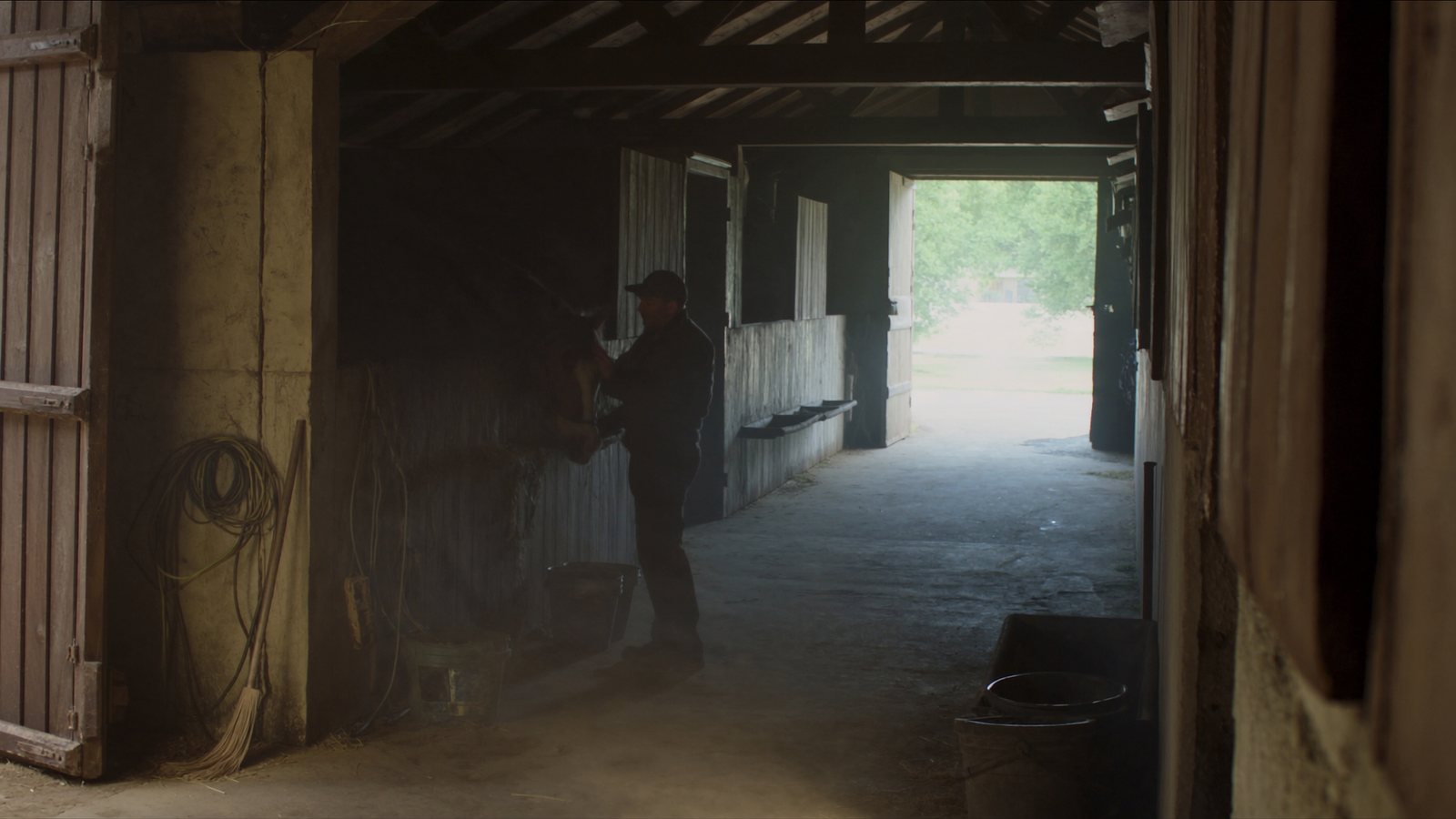
A useful handover includes the current ration, relevant health history, any standing professional instructions, the observations that are normal for this horse, and who to contact if something changes.
- The current ration
- Relevant health history
- Standing professional instructions
- What is normal for this horse
- Who to contact if something changes
Veterinary guidance already stresses gradual feed changes, appropriate turnout, consistent routines, and ongoing dental and parasite care as part of digestive management.7 Microbiome Management does not claim to have invented good horsemanship. It shows why those established practices belong together and what they are all quietly protecting.
Our guide Supporting your horse’s gut health through daily management develops each of these areas. Supporting the gut environment: What does that actually mean for a horse? explains how decisions outside the horse become conditions inside it.
Pain, fecal water and gastric problems need distinct explanations
Many owners first meet the word “microbiome” while searching for an answer to a specific problem. The framework organizes those questions without pretending they share one cause.
Colic describes abdominal pain, and it can arise from very different problems, including obstruction and displacement. A general discussion of microbial support cannot account for all of them.8 If you suspect colic, call your veterinarian promptly.7
Free fecal water is a different observation, and the research on it is genuinely unsettled. A Canadian study comparing 14 affected horses with 11 healthy stablemates found no significant difference in their fecal microbiota. A later study reported measurable differences in community structure between affected and control horses.9,10 Two careful studies, two different answers, from small groups in different populations. Anyone who tells you free fecal water comes down to one missing bacterium is ahead of the evidence.
Gastric ulcers concern the stomach. Equine gastric ulcer syndrome includes squamous and glandular disease, which are distinct conditions that need veterinary assessment.11 Evidence about the hindgut does not automatically say anything about the stomach.
Daily management and professional assessment belong in the same care program, with different roles. Our guide Horse manure and digestive changes: A guide to understanding what you see is a starting point for describing what you see and finding the right next step.
Where Humequine fits
Humequine sits at the first stage of this framework, the biological environment. It fuels the growth of beneficial bacteria with bioavailable carbon, the carbon held in humic and fulvic acid. Humic acid binds to unwanted compounds, supporting natural detoxification, and fulvic acid binds to nutrients and water molecules for enhanced absorption and hydration. It works alongside the forage, water and routine above, not instead of them.
The evidence behind each function, including which studies were done in horses, is in Humic acid, fulvic acid, and carbon in equine gut health: Understanding the evidence. Where Humequine fits within a Microbiome Management program covers the product directly.
From Humequine
Humequine Digestive Stability Formula
A daily liquid concentrate formulated with humic and fulvic acid. Tasteless and odorless, it is added to feed or grain. Made in Canada, for horses only.
See the formula
A practical place to begin
You do not need to change everything after reading about the microbiome. Begin by making your current program easier to describe.
Write down the forage and feeds your horse receives, the feeding arrangement, water access, turnout and any recent changes. Add standing veterinary or nutritional instructions so they stay part of the picture. Then name the question you actually need answered. It might be “how should we plan the next hay change?” or “is this recurring observation something our veterinarian needs to look at again?” or simply “are we all following the same routine?”
That last one matters most in a shared barn, where an apparent inconsistency is often an information gap. The morning feeder notices things the evening staff never see, and agreeing on what to record and who to tell turns scattered observations into something usable.
If a change is recommended, be clear about its purpose and how it will be reviewed. A short list of understood decisions beats a long list of additions whose roles nobody can state.
Microbiome Management gives you somewhere to return when the next question arrives: what conditions are we providing, what are we observing, and what does this particular horse need us to look at more closely? Digestive Stability gives that attention a longer view. Improvement matters. So does knowing whether it holds, under what conditions, and with what limits. That is the standard the horse deserves.
For the next step, read The equine microbiome: How the hindgut helps your horse digest forage, or work through the daily-management guide with the people who care for your horse. Either way, the work starts before the next problem, with the horse that is doing well today.
Frequently asked questions
What is Microbiome Management for horses?
Microbiome Management is the practice of supporting the environment inside the gut so beneficial microbial communities have the conditions they need to thrive, stabilize and do their work. It brings forage, water, routine, microbial biology and careful observation into one framework, with Digestive Stability as the goal.
What are the four stages of the Microbiome Management Framework?
Support the biological environment, support the microbiome, support Digestive Stability, and support whole-body condition and resilience. The stages are a way of thinking, not a conveyor belt: microbes respond to their surroundings, and their activity changes those surroundings.
Why do digestive improvements in horses so often fade?
In one study, ponies' gut microbial communities shifted within days of an abrupt forage change. A supplement started the same week as a good load of hay can take the credit for the hay, and the next load can take it back. That is why the framework asks whether an improvement held through the next change, not only whether it appeared.
What is Digestive Stability in horses?
At Humequine, we define Digestive Stability as the ability of the digestive system to remain balanced, resilient, and consistent over time, while adapting to the normal changes a horse encounters. It is a practical goal you observe over time, not a diagnostic score.
What does free fecal water in horses mean?
Free fecal water describes formed manure with water passed separately. The research on its cause is genuinely unsettled: a Canadian study of 14 affected horses and 11 healthy stablemates found no significant difference in fecal microbiota, while a later study reported measurable differences in community structure. What helps most is a consistent written description over time, so you can see whether the pattern changes with the conditions you set.
Where do probiotics fit in Microbiome Management?
Microbiome Management evaluates probiotics as tools inside a bigger program. One reasonable explanation for why the same probiotic helps one horse and not the next is that live organisms arrive into an environment, and no two horses offer the same one. Probiotic research should be read at the level of the specific preparation, the horses studied and the outcome measured.
References
- University of Maryland Extension. Teaching Basic Equine Nutrition Part II: Equine Digestive Anatomy and Physiology. extension.umd.edu/resource/teaching-basic-equine-nutrition-part-ii-equine-digestive-anatomy-and-physiology
- Ericsson AC, Johnson PJ, Lopes MA, Perry SC, Lanter HR. A Microbiological Map of the Healthy Equine Gastrointestinal Tract. PLOS ONE. 2016;11(11):e0166523. doi.org/10.1371/journal.pone.0166523
- Garber A, Hastie P, McGuinness D, Malarange P, Murray JA. Abrupt dietary changes between grass and hay alter faecal microbiota of ponies. PLOS ONE. 2020;15(8):e0237869. doi.org/10.1371/journal.pone.0237869
- University of Minnesota Extension. Using hay in horse diets. extension.umn.edu/horse-nutrition/hay-horse-diets
- University of Minnesota Extension. Encouraging your horse to drink. extension.umn.edu/horse-nutrition/encouraging-your-horse-drink
- Żak-Bochęnek A, Żebrowska-Różańska P, Bajzert J, and colleagues. Investigating the potential immunomodulatory effects of commercial oral probiotic supplements on equine gastrointestinal tract barrier function. Frontiers in Immunology. 2025;15:1487664. doi.org/10.3389/fimmu.2024.1487664
- University of Pennsylvania School of Veterinary Medicine. Colic: What you can do. www.vet.upenn.edu/new-bolton-center/clinical-services/emergency-critical-care/colic-what-you-can-do/
- UC Davis Center for Equine Health. Colic: A pain in the gut. 2024. cehhorsereport.vetmed.ucdavis.edu/news/colic-pain-gut
- Wester RJ, Baillie LL, and colleagues. Dysbiosis not observed in Canadian horses with free fecal liquid (FFL) using 16S rRNA sequencing. Scientific Reports. 2024. doi.org/10.1038/s41598-024-63868-1
- Porter MM, Davis DJ, McAdams ZL, Townsend KS, Martin LM, Wilhite C, Johnson PJ, Ericsson AC. Alterations in the Microbiome of Horses Affected with Fecal Water Syndrome. Veterinary Sciences. 2025;12(8):724. doi.org/10.3390/vetsci12080724
- UC Davis Center for Equine Health. Understanding equine gastric ulcers. 2025. cehhorsereport.vetmed.ucdavis.edu/news/understanding-equine-gastric-ulcers
These statements have not been evaluated by the Food and Drug Administration. This product is not intended to diagnose, treat, cure, or prevent any disease.
This article is for education and is not veterinary or medical advice. If you have a significant concern about your horse, talk to your veterinarian or an equine nutritionist.