The Microbiome Management seriesPillar 3 of 6
One normal pile at the morning check can feel like a breakthrough when you have been watching a horse closely. It is a good moment. The harder question comes after it: will it be there again tomorrow, next week, and after the next change in routine?
That is the question Digestive Stability answers. Within the Microbiome Management Framework, it is the outcome the rest of the practice works toward.
You find out the way barn people always have: the same horse, watched the same way, over enough ordinary days to know what normal looks like. Describe what changed, how far it moved from that horse’s usual pattern, how long it lasted, and what happened afterward. Read manure alongside appetite, drinking and longer-term condition, rather than asking one pile to stand for everything.
What we mean by Digestive Stability
At Humequine, we define Digestive Stability as the ability of the digestive system to remain balanced, resilient, and consistent over time, while adapting to the normal changes a horse encounters.
It is the outcome the Microbiome Management Framework is organized around. Microbiome Management for horses: A framework for Digestive Stability sets out the Framework as a whole.
Three ideas inside the definition do the work. Consistency is the pattern across ordinary days. Adaptation is how the horse adjusts while circumstances are changing. Resilience is the return toward that horse’s usual pattern once the change has passed.
Inside the definition
Across ordinary days
Consistency
Finishes the evening feed, week after week.
While things change
Adaptation
Manure slightly softer, still formed, the week the new hay arrives.
After the change
Resilience
The usual pattern back once the new hay is familiar.
You can describe all three from the outside, and that is enough to recognize real progress.
Start with your horse’s baseline
A baseline is a plain description of what is usual for your horse in a known situation: what fresh manure looks like, how the horse comes to its feed and whether it finishes, what you can see of drinking, and the current feeding and turnout arrangement.
Treat it as a reference, not a portrait of the horse on a good day. “Usually finishes this feed before the evening check” is more useful than “good appetite”, because someone else can recognize it.
A reference
“Usually finishes this feed before the evening check.”
Someone else can recognize it, and it can be compared next month.
A portrait
“Good appetite.”
The horse on a good day, in words nobody else can check.
A baseline also needs a date and a setting. For observation purposes, the horse at pasture in summer is not the same horse as the one stabled through a wet winter. When circumstances change, keep the earlier record and describe the new setting beside it.
Usual does not mean healthy, so a long-running problem still deserves a fresh look.
Our companion article, Finding your horse’s digestive baseline: What to observe over time, builds a simple observation log for this purpose.
Four questions that make a change easier to read
You do not need a scoring system. You need a consistent way to say what you noticed.
1. What changed?
Name the observation before you offer an explanation. “Left part of the usual evening feed” describes an event. “The microbiome is struggling” proposes a cause you have not established.
Keep changes in the horse separate from changes in the routine. A new hay delivery, a journey, a different turnout group or a prescribed medication belongs in the context column. Something that happened before an observation is worth writing down. It does not follow that it caused the observation.
2. How large was the change?
Describe the difference from the usual pattern in concrete terms. Was the manure slightly softer but still formed, or had it changed altogether? Was some feed left, or did the horse refuse to eat?
3. How long did it last?
Record when you first noticed the change and when you last saw it, and include the gaps. “Seen at the morning check, not seen again until evening” is more accurate than assuming you know what happened in between.
4. What happened afterward?
Did the observation return toward the horse’s usual pattern, persist, recur or become more pronounced? Did appetite and demeanor stay usual? What care or management changed in the same period?
This last question is what separates a promising moment from a sustained change. It also keeps the record honest when an improvement was partial or short-lived.
Different observations answer different questions
Manure, appetite, drinking and condition belong in the same record, but each keeps its own meaning. Folding them into one “gut score” can hide a concerning change behind a reassuring one.
Manure
“Formed, as usual.”
Appetite
“About half the evening hay left.”
Water
“Not seen. Shared trough.”
Condition
“Holding. Same tape, same method as last month.”
Manure: describe what you actually see
Record the form and consistency of fresh manure where you can, along with anything unusual and the circumstances in which you saw it. A pile that has been rained on or trampled is harder to compare with a fresh one.
If liquid is passed separately from formed manure, say so. It means something different from all the manure being loose. The distinctions, and the possible next steps, belong in Horse manure and digestive changes: A guide to understanding what you see.
Distinguish “no manure seen” from “the horse passed no manure”. Shared turnout and the timing of mucking out limit what you know. Uncertainty belongs in the record.
Appetite: include the feeding opportunity
A useful appetite note says what was offered, what was left and when it was checked. “Hay left” means little if the amount offered, or access to pasture, has changed.
In a shared paddock, seeing a horse at the feeder does not tell you how much it ate. Record what you can see rather than estimating with false precision.
Eating less or refusing feed can matter clinically.2 A normal pile does not cancel out a change in appetite. Different observations can point in different directions, so record both.
Water: distinguish drinking from hydration
A measured bucket can help describe drinking, but account for refills, spills and other water sources. With a shared trough or an unmetered automatic waterer, individual intake may simply be unknown.
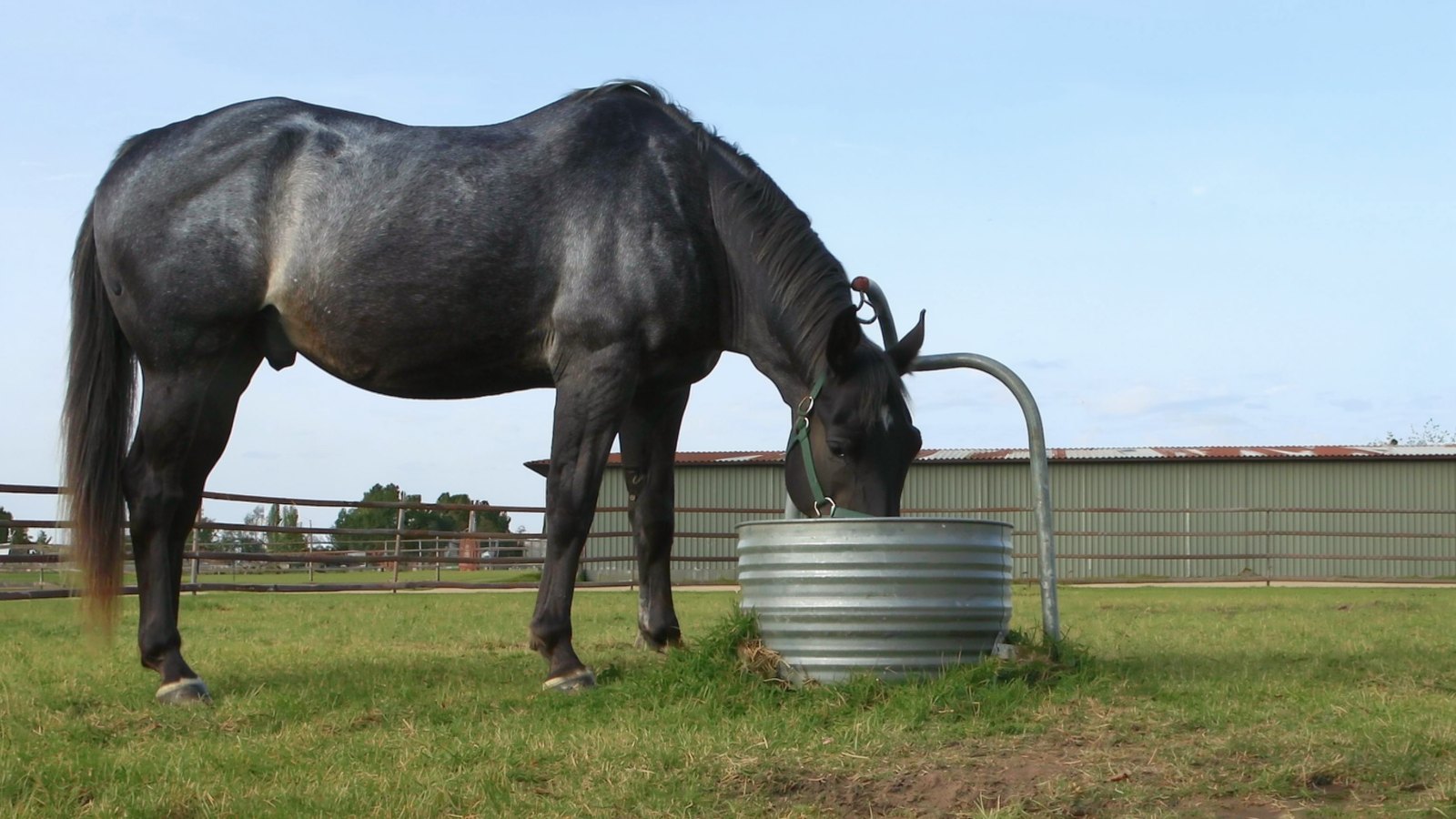
Water needs change with work, weather and travel. A bucket comparison without that context can mislead. Record the circumstances with the observation, and keep fresh water freely available unless your veterinarian gives specific instructions.
“Seen drinking” is useful information. It is not an assessment of hydration.
Condition: keep the measures distinct
Body weight, body condition and muscle are different observations. A condition score measures fat cover, not digestion and not muscle.1
A weight estimate is another measure. If you follow it over time, record the method and use the same one each time. Photographs add context, particularly when angle and stance are comparable, but they do not replace hands-on assessment.
Describe changes without handing them to digestion by default. “Holding weight” and “looking stronger through the topline” are different statements.
Adaptation and recovery are related, but not identical
A digestive system is active. Stability cannot mean that nothing inside it ever changes.
One study followed twelve horses through two abrupt changes in a row, five days on a high-starch diet and then back to high fiber, and tracked both the make-up of the fecal community and its fiber-degrading activity. The activity shifted within two days of the first change. After the return to fiber, the fecal measures took three to four weeks to settle back to where they had started, and different measures moved on different timescales along the way.3
One study, twelve horses, drawn to scale in days
Five days on a high-starch diet High-fiber diet
Those are one study’s numbers, for one kind of change, in twelve horses. They are not a schedule for yours. What carries over is the shape: the response came within days and the settling took weeks. That is the case for judging a change by whether it holds, not by the first good pile.
Record the changes that happen in the normal course of his year, and follow the management plan that suits the horse. The companion article Digestive resilience in horses: What happens during and after change? looks at these ideas more closely.
What would count as useful progress?
Progress might be a recurring observation appearing less often, a more dependable appetite, or condition holding through the winter. The goal depends on the concern being addressed.
Decide what you are watching before you interpret the result. “Doing better” is harder to judge than “the observation we agreed to track occurred less often during this period”.
Compare circumstances as well as outcomes. If a horse seems more consistent after coming home from competition, the change of setting belongs in the interpretation. If forage, turnout and a supplement all changed in the same month, the record cannot separate their effects.
Improvement still counts when its cause is uncertain. You can acknowledge a useful change and keep the explanation open. That is usually the most honest place to start when you review the program with your veterinarian or nutritionist.
Is your horse’s digestive support helping? How to evaluate change responsibly looks at how to set expectations and review results without turning ordinary observation into an uncontrolled product test.
Where Skippy’s observation fits
The Microbiome Management Guide, Equine Edition, includes an owner-reported account of Skippy, a 29-year-old paint pony whose digestive pattern had been difficult to stabilize for years. Whatever helped him helped for a while, and then the old pattern came back. After the Humequine formula went into his daily routine, his owner reported that timothy hay, previously hard to reintroduce, went back into his ration, and that over time his probiotics were dropped. The change held long enough to become his new normal.4
By then the question was no longer whether something could produce a change. It was whether the change would hold.
Skippy’s story: An owner-reported observation of digestive change over time presents that account on its own, with its timeline, its reported changes and its limits.
Individual results may vary. This testimonial reflects one owner’s experience and is not a guarantee of results.
When something worries you
A log helps you communicate a history. If something changes that worries you, Horse manure and digestive changes: A guide to understanding what you see lists the signs that call for your veterinarian the same day.
When you call, be ready to say what you saw, when it started, when the horse last passed manure, when and what it last ate, and what has changed recently. Those are the details a veterinarian asks for alongside the examination.5
- What you saw
- When it started
- When the horse last passed manure
- When and what it last ate
- What has changed recently
Make the pattern easier to see
Begin with a record simple enough that everyone who cares for the horse will keep it. Dates and times, plain descriptions, the changes in routine, and a mark for what you do not know. Agree who passes a concern to the owner or the veterinarian.
Our guide to Supporting your horse’s gut health through daily management connects that record with forage, water, routine and transitions, the everyday decisions that give an observation its meaning. A record like that can guide the next conversation with your veterinarian.
Microbiome Management is the practice. Digestive Stability is what you are looking for at the end of it. Improvement tells you something changed. Stability tells you whether it held.
Humequine is Microbiome Management for Horses. It supports the environment that beneficial bacteria need, so the microbial community already in the horse can grow and stabilize naturally. Where Humequine fits within a Microbiome Management program shows where it comes in.
Digestive Stability, built daily
Humequine Digestive Stability Formula
A daily liquid concentrate formulated with humic and fulvic acid, made to sit inside the routine you are already recording. Tasteless and odorless, it is added to feed or grain. Made in Canada, for horses only.
See the formulaFrequently asked questions
What is Digestive Stability in horses?
At Humequine, we define Digestive Stability as the ability of the digestive system to remain balanced, resilient, and consistent over time, while adapting to the normal changes a horse encounters. It is the outcome the Microbiome Management Framework is organized around, and you recognize it by watching the same horse the same way over ordinary days.
How can I tell whether my horse’s digestive improvement will hold?
Describe what changed, how far it moved from that horse’s usual pattern, how long it lasted, and what happened afterward. The last question is what separates a promising moment from a sustained change. Improvement tells you something changed. Stability tells you whether it held.
What is a digestive baseline for a horse?
A baseline is a plain description of what is usual for your horse in a known situation: what fresh manure looks like, how the horse comes to its feed and whether it finishes, what you can see of drinking, and the current feeding and turnout arrangement. It needs a date and a setting, because the horse at pasture in summer is not the same horse as the one stabled through a wet winter.
What should I record about my horse’s manure, appetite and water?
For manure, the form and consistency of fresh piles and the circumstances you saw them in. For appetite, what was offered, what was left and when it was checked. For water, the drinking you can see, with refills, spills and other sources accounted for. Keep each one separate rather than folding them into a single gut score.
How long does a horse’s gut take to settle after a feed change?
In one study, twelve horses moved abruptly onto a high-starch diet for five days and then back to high fiber. Fiber-degrading activity shifted within two days of the first change, and fecal measures took three to four weeks to settle after the return to fiber. Those are one study’s numbers, not a schedule for your horse. What carries over is the shape: the response came within days and the settling took weeks.
What is the difference between adaptation and resilience?
Adaptation is how the horse adjusts while circumstances are changing. Resilience is the return toward that horse’s usual pattern once the change has passed. Together with consistency, the pattern across ordinary days, they are the three ideas inside Digestive Stability.
References
- Hathaway M, Catalano D, Martinson K. Caring for the underweight horse. University of Minnesota Extension. Reviewed 2024. extension.umn.edu/agriculture/animals-and-livestock/horse/caring-for-the-underweight-horse
- Young A. Colic Happens: What You Can Do Before, During, and After a Colic. UC Davis Center for Equine Health, Horse Report. 2024. cehhorsereport.vetmed.ucdavis.edu/news/colic-happens
- Collinet A, Grimm P, Julliand S, Julliand V. Sequential Modulation of the Equine Fecal Microbiota and Fibrolytic Capacity Following Two Consecutive Abrupt Dietary Changes and Bacterial Supplementation. Animals. 2021;11(5):1278. doi.org/10.3390/ani11051278
- Humequine. Microbiome Management Guide, Equine Edition. 2026, page 13, “What stability can look like.” Owner-reported observation.
- University of Pennsylvania School of Veterinary Medicine, New Bolton Center. Colic: What you can do. www.vet.upenn.edu/new-bolton-center/clinical-services/emergency-critical-care/colic-what-you-can-do/
These statements have not been evaluated by the Food and Drug Administration. This product is not intended to diagnose, treat, cure, or prevent any disease.
This article is for education and is not veterinary or medical advice. If you have a significant concern about your horse, talk to your veterinarian or an equine nutritionist.