The Microbiome Management seriesPillar 5 of 6
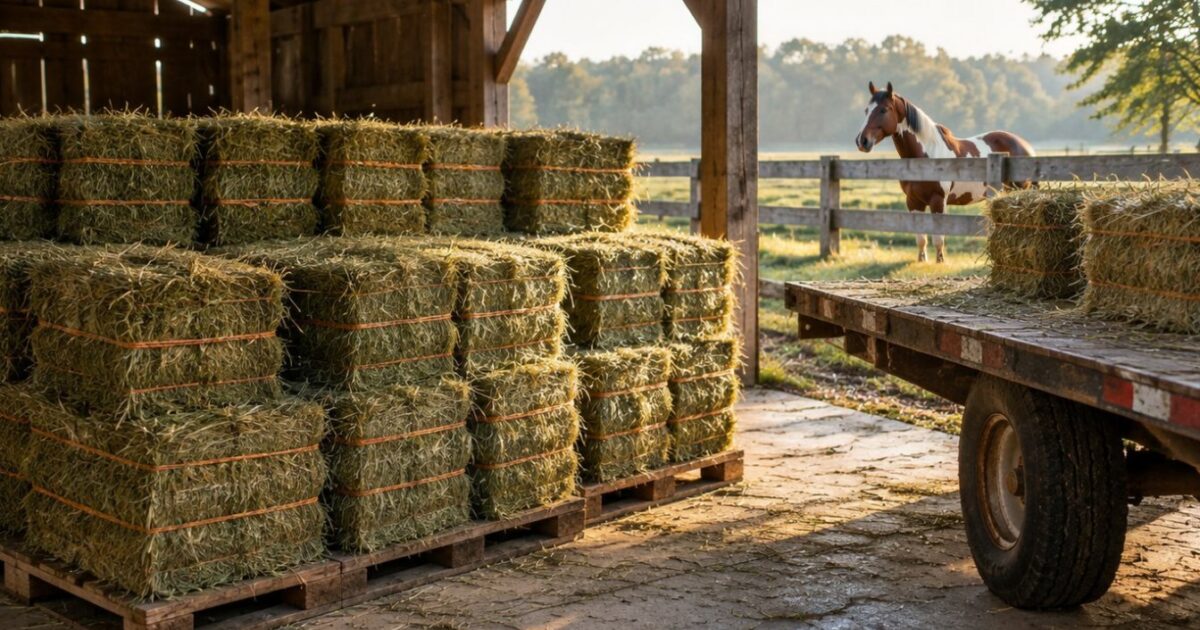
The hay truck comes on Thursday. Somewhere in the barn there is a feed chart, a trough that was full yesterday, a turnout list and a note on the whiteboard about who is feeding on Saturday. None of it looks like gut health. All of it is.
Microbiome Management is the practice of supporting the environment that beneficial bacteria need, so the community already living in your horse can grow and stabilize.
The outcome it works toward is Digestive Stability, built daily. Daily is the point. Stability is not made at the moment you choose a feed or a supplement. It is made in the ordinary decisions between one feed and the next, and you are already making most of them.
So instead of a checklist, here is one ordinary day, from the morning flake to the evening handover, with the two disruptions every barn eventually meets: a new load of hay and a weekend away.
Morning: the flake
The first flake goes over the door, and it is the one input the hindgut cannot do without. Horses depend on microbial fermentation to get energy from the fibrous part of hay and grass: the microbes break the fiber down into compounds the horse absorbs and uses.1 Every flake feeds the horse and feeds the community inside him, and that community is what turns roughage into energy.
Two questions at the hay stack matter.
The first is how much. A flake has no fixed weight, and it changes from one load to the next. Weigh the usual flake or scoop once, and again whenever the hay, the scoop or the feed changes. “More forage” does not mean unlimited forage. Some horses need a measured amount or a different hay on professional advice, and a forage analysis tells a nutritionist what a batch actually contains.2 What a horse needs depends on his age, weight, work and metabolism, and in a mare on pregnancy or lactation,3 so the right amount is the one worked out for this horse.
The second is whether he can reach it. Watch whether one horse is pushed off the hay, and count the hours between the last hay at night and the first in the morning. A long stretch with nothing to chew is a change in conditions inside the horse, whatever the chart says.
Grain comes after forage, not instead of it: extension guidance puts forage at the base of the ration and limits cereal grain at any one feeding.4 Bagged feeds are not interchangeable, so record the product name and feed it the way that product is meant to be fed.
Watch him chew while you are there. Teeth decide how well feed is broken down before it reaches the hindgut, so wads of half-chewed hay on the floor, trouble chewing or weight loss are a dental question for your veterinarian.5
Mid-morning: the gate
The latch lifts and he walks out, and that is a digestive decision as much as anything else in the day. Light exercise and time moving at grass help keep the intestines working, and a consistent schedule of work, feeding and turnout is among the ordinary practices veterinarians recommend for digestive health.6 A horse on stall rest does not get more movement for the sake of his gut. Ask the treating veterinarian how feeding should change while he is confined.
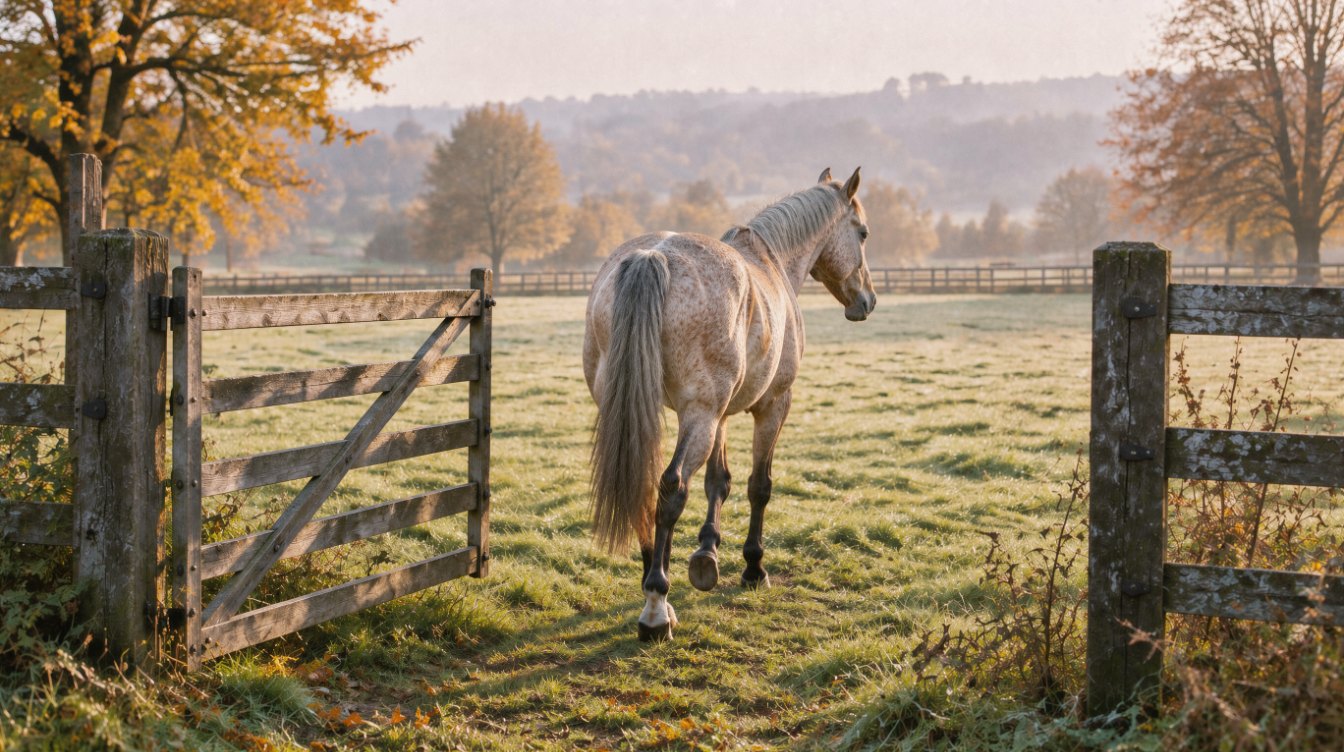
Grass is part of the ration, and it reaches the same community the morning flake did. The field is not the same field all year: spring growth changes the sugars the horse takes in. For horses and ponies prone to pasture-associated laminitis the question is not how gradually to introduce grass but whether to at all, and that is your veterinarian’s call before the gate opens.7 If grass has to be limited, the horse still needs forage in front of him and room to move, and the plan should say how.
The turnout list records an opportunity. Whether he uses it, and whether the group lets him reach the hay and the trough, only your eyes will tell you.
Turnout, movement, and routine: The wider context of equine digestive health and Pasture transitions and horse gut health: Planning for changing grazing conditions take these two decisions further.
Midday: the trough
Somebody is dragging the hose to the trough. Fermentation in the hindgut happens in water, so what he drinks here is part of the same environment this morning’s hay went into. Water is part of digestion and of how material travels through the tract, and a horse that drinks less in cold weather tends to eat less and is more prone to impaction.8
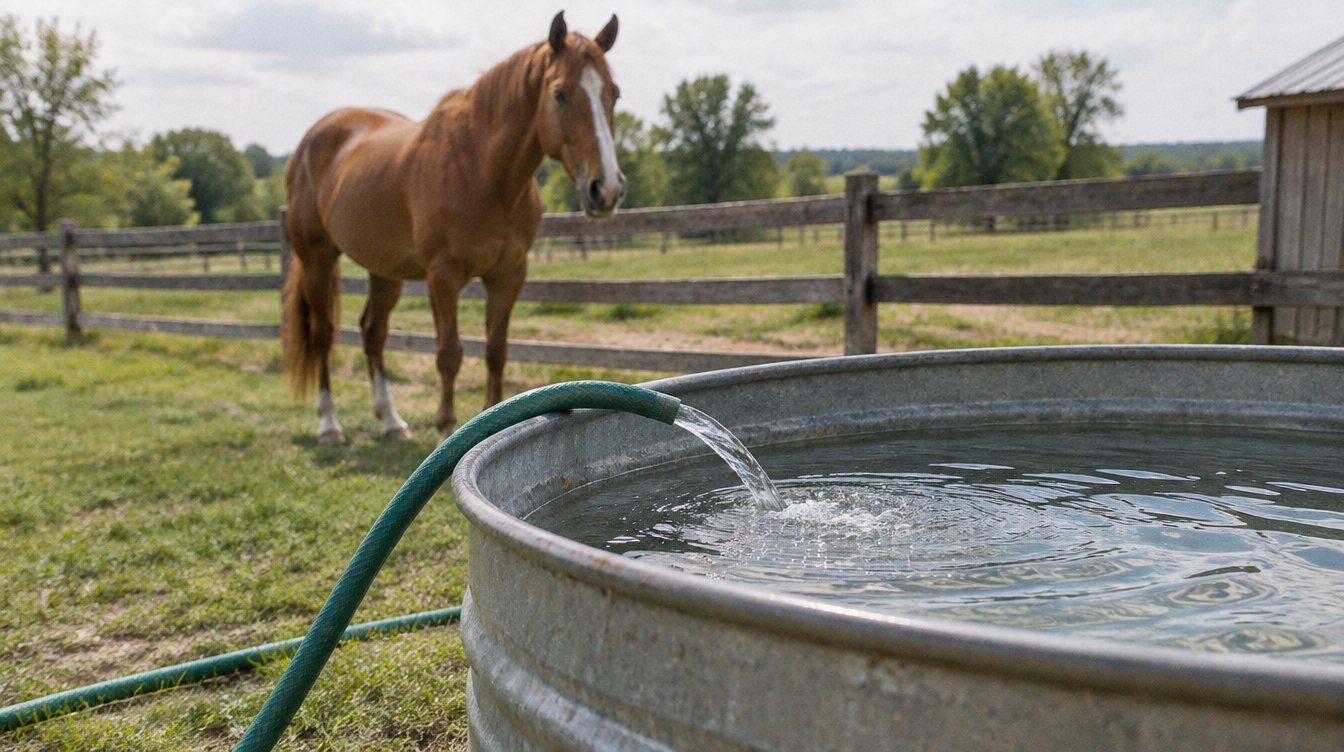
The daily check is unglamorous. Clean water, a supply that works, a horse that can get to it. A trough that was full yesterday and a waterer that looks intact both still need looking at, and in winter both need checking for ice. In a group, watch whether the timid horse gets his turn.
If the field runs on an unmetered waterer, nobody knows how much any one horse drank, and the log should say so. Needs rise with work and heat,9 so there is no single daily volume to aim at.
Water and equine digestion: Supporting consistent access and noticing changes covers the practical detail.
Thursday afternoon: the hay truck
The new load arrives, and it is a change of diet even though nothing on the feed chart moves. A study in ponies found that abrupt switches between grass and hay shifted the fecal microbial community within days, without any pony becoming ill.10 That is the whole case for treating a new batch as a transition rather than a delivery. The community inside the horse notices before you do.
Extension guidance recommends gradual changes to hay, feed and grazing.11 How gradual depends on the horse and the change, so the useful plan names the starting ration, where you are going and the steps between.
Order before the old hay runs out, so some is left to mix. Label the batches. Write the mixing instructions where the person feeding on Saturday will see them, and note the date the new hay started. If the old hay is spoiled or unsafe, do not keep feeding it to protect a schedule. Ask for a safe replacement.
Changing hay or feed: Helping your horse adapt to a new diet takes the transition step by step.
Evening: the handover
The person who fed this morning is not always the person who feeds tonight, and the gut does not know that. Consistency inside the horse depends on consistency between people.
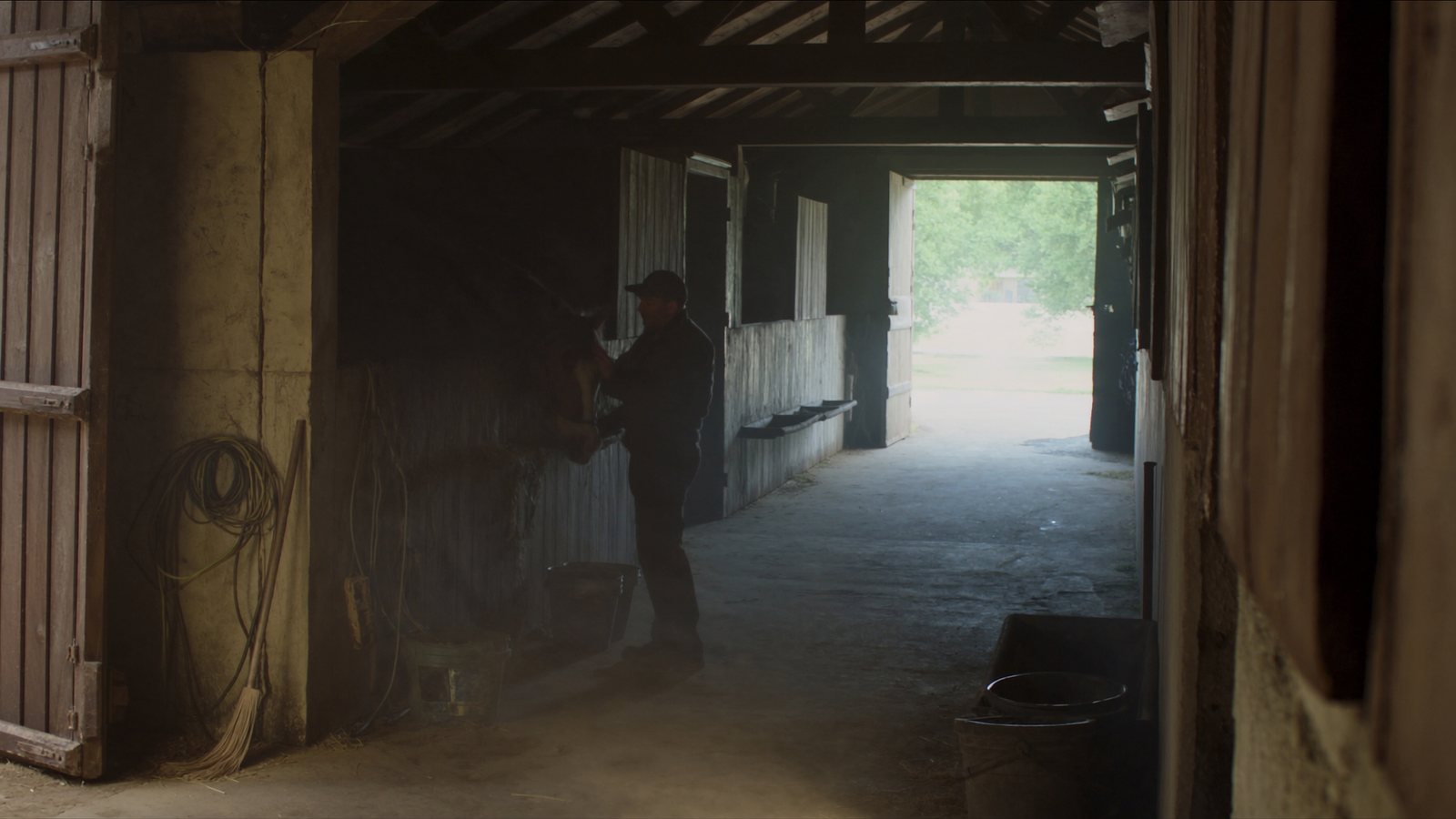
Keep one current feeding record, with the exact products, the amounts by weight, how the feed is prepared and any veterinary restrictions. Date it. Take the old copy down so it does not sit beside the feed bin contradicting the new one.
Then make the exceptions easy to pass on. “Morning feed offered” and “morning feed eaten” are different facts. So is a waterer that failed, a horse that did not go out or a bale that looked dusty. Whoever is on tomorrow needs those, and needs to know who can authorize a change.
Toby: feeding planDated 2 October
- Hay
- Grass hay, 10 lb morning, 10 lb evening, weighed. New load started 2 October, mixed with the old as written on the stack.
- Bagged feed
- Ration balancer, morning only, the amount the bag gives for his weight.
- Prepared
- Dry.
- Veterinary restrictions
- None.
- Changes by
- Owner. Vet for anything medical.
Today
- AM feed offered, half eaten.
- Field waterer not running. Tub filled by hand.
- Kept in. Wet paddock.
Consistency is not freezing the routine. It is everyone being able to say what the plan is, follow it and change it on purpose.
The weekend away
Travel changes several conditions at once: the forage, the water, the movement, the timing and the eyes on the horse. The community inside him meets all of them at once. “Travel stress” is a fair summary and a poor plan. The better questions are where the familiar hay is coming from, who is checking that he drinks, what movement he gets between classes and who will notice if something changes.
Bring water from home where you can, since a new source can put a horse off drinking, and if flavored water or electrolytes are part of the plan keep plain water available beside them.12 Take a short travel version of the home record, with the veterinary contact and any medical instructions, and confirm what the destination provides. Record the trip home as a transition too.
Travel copyGoes in the trailer with him
- Hay
- From home, or supplied by
- Water
- From home. Plain water beside any electrolytes
- Checking he drinks
- Movement between classes
- Veterinary contact
- Home on
- Recorded as a transition
Travel and competition: Planning for your horse’s digestive routine away from home is the full checklist, and it applies to a barn move or a new caretaker too.
What you write down
Keep the record simple enough that everyone keeps it: appetite, fresh manure, drinking where you can see it, behavior and condition checked the same way each time. Write what you saw, not what you think caused it. “Formed manure with liquid after it” is an observation. “His microbiome is off” is a guess. Digestive Stability in horses: How to tell whether a change holds is where that record earns its keep, and A digestive management review for your horse or barn walks the whole day at once.
Some things in the day belong to your professionals, not the log. Parasite control needs a veterinary plan built on targeted treatment and on testing whether the dewormer still works, and a fecal egg count is not a test for parasite-related disease,13 so a change in the manure is not a reason to deworm on your own.
An unwell horse is a different day. New diarrhea, pawing or rolling, dullness or a horse off his feed: call your veterinarian.14,15 Horse manure and digestive changes: A guide to understanding what you see is for describing what you see while you make the call.
Where we come in
Humequine makes a daily formula, a liquid added to feed or grain, and it belongs in the day above, beside the weighed flake, the hay kept back to mix, the trough checked and the note left for Saturday. Most equine supplements add something to the horse. Ours is made to support the environment that beneficial bacteria need, the environment every decision in this day is shaping. The Microbiome Management Framework, set out in Microbiome Management for horses: A framework for Digestive Stability, starts there for exactly that reason. Anything you add lands in the conditions the day has already made, and should have a job you can name. Where Humequine fits within a Microbiome Management program names ours.
Digestive Stability, built daily
Humequine Digestive Stability Formula
A daily liquid concentrate formulated with humic and fulvic acid, made to go in beside the weighed flake and the checked trough. Tasteless and odorless, it is added to feed or grain. Made in Canada, for horses only.
See the formulaBefore the truck comes
If you want one thing to do this week, make it the hay. Look at what is left and keep the last bales back, so the new load can be mixed in rather than dropped in.
A note on horses under veterinary care: a horse on a veterinary feeding plan or on restricted exercise follows that plan first.
Frequently asked questions
What is Microbiome Management for horses?
Microbiome Management is the practice of supporting the environment that beneficial bacteria need, so the community already living in your horse can grow and stabilize. The outcome it works toward is Digestive Stability, built daily. It is made in the ordinary decisions between one feed and the next: the flake, the gate, the trough and the handover.
How much hay should my horse get each day?
The right amount is the one worked out for this horse. What a horse needs depends on his age, weight, work and metabolism, and in a mare on pregnancy or lactation. A flake has no fixed weight and changes from one load to the next, so weigh the usual flake or scoop once, and again whenever the hay, the scoop or the feed changes. A forage analysis tells a nutritionist what a batch actually contains.
How should I switch my horse to a new load of hay?
Treat a new load as a change of diet, even though nothing on the feed chart moves. In one study, abrupt switches between grass and hay shifted the ponies’ fecal microbial community within days. Order before the old hay runs out so some is left to mix, label the batches, and write a plan that names the starting ration, where you are going and the steps between. How gradual depends on the horse and the change.
How much water does a horse need?
There is no single daily volume to aim at, because needs rise with work and heat. The daily check is clean water, a supply that works and a horse that can get to it, with troughs and waterers checked for ice in winter.
How do I keep my horse’s routine steady when we travel?
Travel changes several conditions at once: the forage, the water, the movement, the timing and the eyes on the horse. Settle where the familiar hay is coming from, who is checking that he drinks, what movement he gets between classes and who will notice if something changes. Bring water from home where you can, keep plain water beside any flavored water or electrolytes, take a travel copy of the record with the veterinary contact, and record the trip home as a transition too.
What should I write down about my horse’s digestion?
Appetite, fresh manure, drinking where you can see it, behavior and condition, checked the same way each time. Write what you saw, not what you think caused it: “formed manure with liquid after it” is an observation, “his microbiome is off” is a guess.
References
- University of Maryland Extension. Teaching Basic Equine Nutrition Part II: Equine Digestive Anatomy and Physiology. 2021. extension.umd.edu/resource/teaching-basic-equine-nutrition-part-ii-equine-digestive-anatomy-and-physiology
- University of Minnesota Extension. Understanding your hay analysis. Reviewed 2021. extension.umn.edu/agriculture/animals-and-livestock/horse/understanding-your-hay-analysis
- Martinson K, McIntosh B. Using hay in horse diets. University of Minnesota Extension. Reviewed 2023. extension.umn.edu/agriculture/animals-and-livestock/horse/hay-in-horse-diets
- Hathaway M, Catalano D. Ten things you should know about feeding the mature horse. University of Minnesota Extension. Reviewed 2021. extension.umn.edu/agriculture/animals-and-livestock/horse/ten-things-you-should-know-about-feeding-the-mature-horse
- Bedford H, Manfredi J. Caring for your horse’s teeth. University of Minnesota Extension. Reviewed 2021. extension.umn.edu/agriculture/animals-and-livestock/horse/caring-for-your-horses-teeth
- University of Pennsylvania School of Veterinary Medicine, New Bolton Center. Colic: What you can do. www.vet.upenn.edu/new-bolton-center/clinical-services/emergency-critical-care/colic-what-you-can-do/
- Kuhle K. Spring horse tips. University of Minnesota College of Veterinary Medicine, Profiles. 2023. profiles-vetmed.umn.edu/article/spring-horse-tips
- University of Minnesota Extension. Caring for your horse in the winter. Reviewed 2022. extension.umn.edu/agriculture/animals-and-livestock/horse/caring-for-your-horse-in-the-winter
- University of Minnesota Extension. Caring for horses during hot weather. Reviewed 2024. extension.umn.edu/agriculture/animals-and-livestock/horse/caring-for-horses-during-hot-weather
- Garber A, Hastie P, McGuinness D, Malarange P, Murray JA. Abrupt dietary changes between grass and hay alter faecal microbiota of ponies. PLOS ONE. 2020;15(8):e0237869. doi.org/10.1371/journal.pone.0237869
- Extension Horses. Changing the Diet of Horses. 2020. horses.extension.org/changing-the-diet-of-horses/
- Johnson J. Encouraging your horse to drink. University of Minnesota Extension. Reviewed 2021. extension.umn.edu/agriculture/animals-and-livestock/horse/encouraging-your-horse-to-drink
- American Association of Equine Practitioners. AAEP Publishes Updated Internal Parasite Control Guidelines. 2024. aaep.org/post/aaep-publishes-updated-internal-parasite-control-guidelines
- Young A. Colic Happens: What You Can Do Before, During, and After a Colic. UC Davis Center for Equine Health, Horse Report. 2024. cehhorsereport.vetmed.ucdavis.edu/news/colic-happens
- Stewart AJ. Overview of Infectious Diarrheal Diseases in Horses. Merck Veterinary Manual. 2022, updated 2026. www.merckvetmanual.com/digestive-system/infectious-diarrheal-diseases-in-horses/overview-of-infectious-diarrheal-diseases-in-horses
These statements have not been evaluated by the Food and Drug Administration. This product is not intended to diagnose, treat, cure, or prevent any disease.
This article is for education and is not veterinary or medical advice. If you have a significant concern about your horse, talk to your veterinarian or an equine nutritionist.