The Microbiome Management seriesPillar 2 of 6The equine microbiome
Pull a flake off the bale and watch your horse settle into it. The steady grind of the jaw, swallow after swallow, and then the hay is out of sight. For the fiber in it, most of the work ahead is done by something other than the horse.
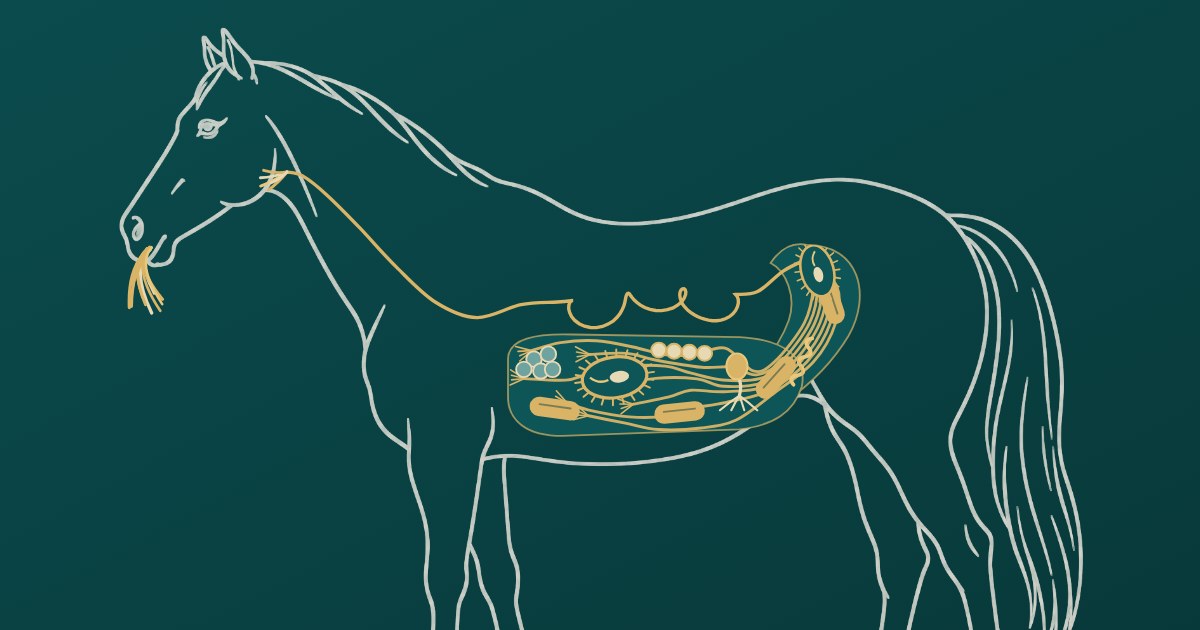
Horses cannot digest fiber on their own. Their digestive enzymes cannot break the walls of plant cells, and hay is largely plant cell walls. That work belongs to the microorganisms living in the cecum and large colon, the fermentation regions of the hindgut. They take the fibrous material the horse cannot use and turn it into something it can.1
So a forage decision is never only a nutrition decision. Every flake feeds the horse and feeds the community inside it, and the community is what turns roughage into energy.
Understanding that partnership is what makes “gut health” a useful phrase instead of a vague one. It gives you a way to ask where something is happening, what is doing the work there, and which part of the process a product or a piece of advice is actually talking about.
Follow a mouthful of forage
Hay does not arrive in the hindgut unchanged. It is chewed, soaked, mixed with acid and worked over by enzymes before it reaches the regions where microbes do most of their work. Each region does something different, and the differences matter when you are trying to work out what a label or a recommendation means.
Where the space is
- StomachAbout 10% of the tract’s capacity
- Small intestineAbout 28%
- Cecum12 to 15%
- Large colonWith the small colon, 40 to 50%
- Small colonCounted with the large colon
Stomach and small intestineHindgut: cecum and colon, more than half the capacity
Chewing prepares the feed
The cheek teeth grind the flake into smaller particles. Saliva moistens it, carries it down the esophagus to the stomach, and adds buffering capacity on the way. That is digestion already under way, not just getting hay small enough to swallow.1
It is also why a horse that has stopped chewing well has a digestive problem before anything microbial comes into it. A dental check belongs in the same conversation as anything you would add to the feed.
The stomach begins a different kind of processing
The stomach mixes the chewed hay with gastric secretions. Acid and enzymes start on protein. It is a different environment from the fiber-fermenting regions further along, with a different job.2
A stomach medication and a hindgut supplement are addressed to different places.
The small intestine digests and absorbs nutrients
Here the horse’s own enzymes take apart protein, fat and digestible carbohydrates such as starch, and the pieces are absorbed through the intestinal wall. Starch, sugars, fat and much of the protein in the ration are collected at this stage, before what remains reaches the hindgut.2
The starch in a scoop of oats is meant to be dealt with here, and what the small intestine does not finish travels on to the microbes. Hay is more than fiber, and a good deal of its value is collected upstream.
The hindgut makes further use of plant material
What is left of the flake, now a mixture of feed and digestive fluid, passes into the cecum and on through the large colon. Mixing and retention hold the plant material in contact with resident microorganisms, and the large colon is shaped for exactly that kind of prolonged processing.3
The gut sounds you can hear at the flank are this stage at work. Further along, the small colon recovers water and forms fecal balls.2
From forage to usable nutrients
Mouth
Chewing reduces particle size. Saliva moistens and buffers the feed.
Esophagus
Moves swallowed feed to the stomach.
Stomach
Mixing, gastric acid, and early protein digestion.
Small intestine
Enzymatic digestion and nutrient absorption.
Nutrients absorbedBreakdown products of protein, fat, and digestible carbohydrates.
Principal hindgut fermentation regions
Cecum
Microbial fermentation of fibrous feed material.
Fermentation productsVolatile fatty acids are absorbed from the cecum and large colon and contribute to the horse’s energy supply.
Large colon
Continued fermentation, mixing, and absorption.
Transverse colon
Passage from the large colon to the small colon.
Small colon
Water recovery continues; fecal balls form.
Water movementWater is absorbed at several sites, including the small intestine and the hindgut.
Rectum and anus
Feces pass out of the horse.
What lives in the equine gut?
You will see “microbiota” for the organisms themselves and “microbiome” for the community together with its genes and what it does.
Bacteria get most of the attention, but the community is wider than that. Equine studies have found archaea, anaerobic fungi and ciliate protozoa alongside them, different kinds of organism with different capabilities, not other names for bacteria. Anaerobic fungi are thought to be among the stronger fiber degraders in the gut.5,6
You do not need the names. The shift that matters is from picturing one helpful organism to picturing a crew. Some split the cell wall open, some work on what spills out, and some live on what the others leave behind.
A crew, not a single organism
Bacteria
The members that get most of the attention.
Archaea
A different kind of organism, not another name for bacteria.
Anaerobic fungi
Thought to be among the stronger fiber degraders.
Ciliate protozoa
Found alongside the others in equine studies.
SomeSplit the cell wall open
SomeWork on what spills out
SomeLive on what the others leave behind
Our companion article, Beyond bacteria: Understanding the microbial community in your horse’s gut, looks more closely at these different members.
Fermentation turns fiber into something the horse can use
Fiber is not one uniform substance. Plant cell walls are made of several components, and how much of each is present, and how accessible it is, changes how a forage gets used. That is why a hay analysis reports neutral detergent fiber and acid detergent fiber separately. “Fiber content” on its own does not describe forage quality.7
During fermentation, microorganisms break down what they can and produce volatile fatty acids, also called short-chain fatty acids. The three that matter most in equine nutrition are acetate, propionate and butyrate. The horse absorbs them across the gut wall and uses them for energy.2
So the flake is not bulk passing through. A meaningful share of what your horse gets from it is made by microbes and handed over.
What the microbes hand over
In the flake
Fiber
Plant cell walls the horse’s own enzymes cannot break.
Cecum and large colon
Fermentation
Microorganisms break down what they can.
Made by microbes
Volatile fatty acids
AcetatePropionateButyrate
Handed over
Energy
Absorbed across the gut wall and used by the horse.
You will see percentages quoted for how much of a horse’s energy comes from fermentation. Treat them carefully. The number depends on the diet, the horse and how energy was measured, and a figure quoted without those details cannot be compared with anything. The pathway is the reliable part: forage supplies fermentable material, microbes process it, the horse absorbs what they make.
It also changes how a feed label reads. “Contains fiber” is true of almost everything a horse eats. What kind, how much of it the horse’s microbes can reach, and what the rest of the ration looks like are the questions that decide what that bag contributes.
Hindgut fermentation in horses: What happens to the fiber your horse eats? takes the flake apart: what is inside the fiber, and why two bales of the same grass differ.
Different digestive regions support different communities
The gut is connected from end to end, but it is not one habitat.
When researchers mapped bacteria across seven regions of the digestive tract in nine healthy adult horses, the communities differed from site to site. The organisms living against the gut lining were different again from the ones in the contents. No single sample stood in for the whole tract.4
One sample, from the last stop
- StomachIts own community
- Small intestineA different one
- CecumDifferent again
- Large colonAnd again
- Small colonToward the end of the line
- Manure sampleWhere most studies, and the commercial tests we know of, take their sample
This matters most when you read about a “microbiome test”. Most equine microbiome studies, and the commercial tests we know of, use manure, because you can collect it without going inside the horse. Manure is useful. It is also a sample from the last stop, and it does not tell you what is happening in the stomach or the small intestine.4
Say a report shows a bacterial group went up in your horse’s manure after a change. Before you read that as better digestion, look for what else was measured. Digestibility, fermentation products, a change in the horse? Or the community alone? A change in what is present is a description. It is not yet a result.
What those microbes can do depends on the conditions they live in: what reaches them, how acidic their surroundings are, and how much water is moving through. Together those are what we mean by the gut environment, and they are why Microbiome Management starts there rather than with the organisms.
Diet changes what the community has to work with
A microbial community responds to what reaches it. In a study of 30 horses, changing the starch source and the amount fed shifted the bacterial groups measured in manure, and corn and oats did not shift them the same way.8 Two feeds that both “contain grain” need not deliver the same thing to the hindgut.
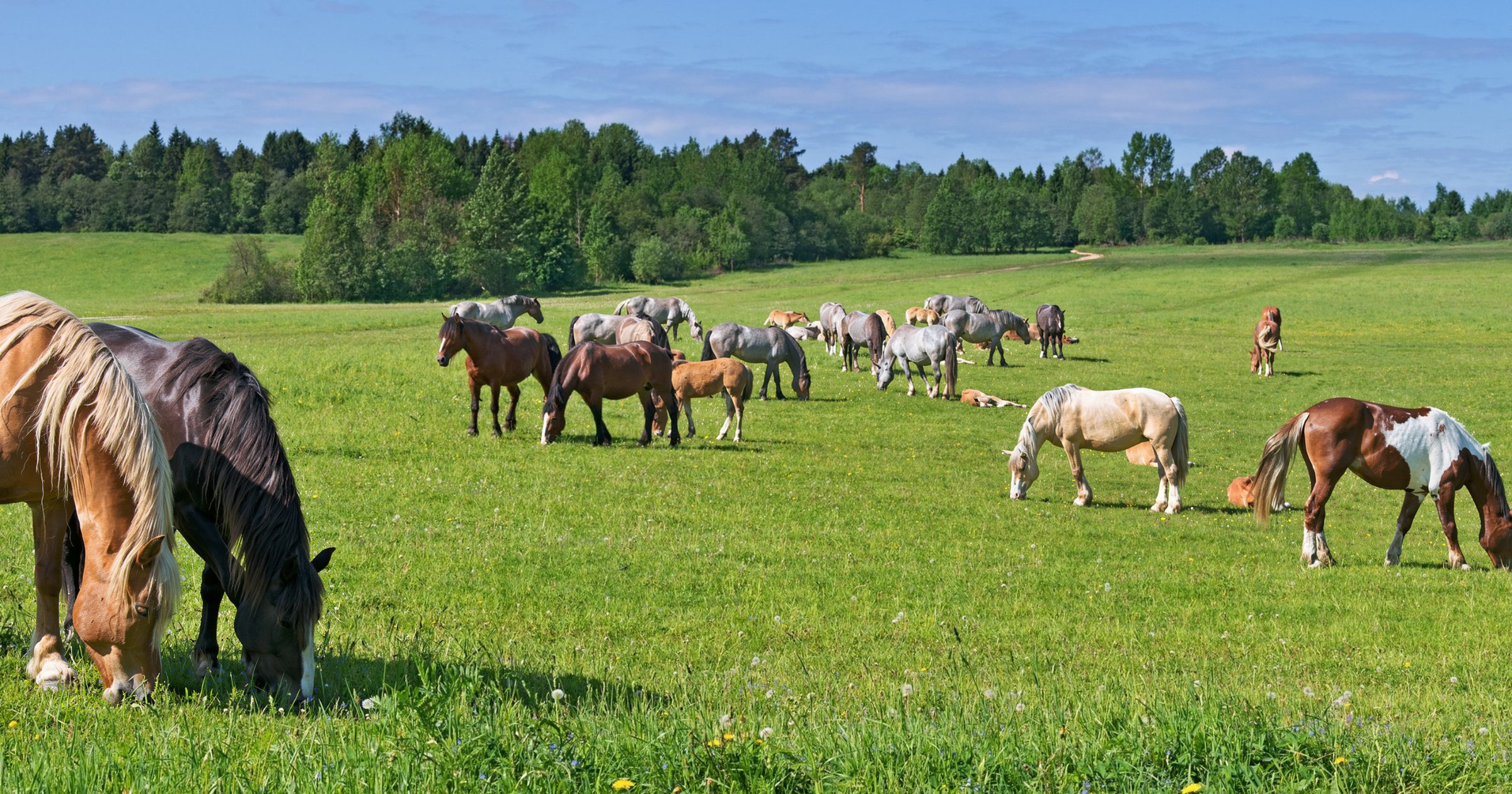
The community also moves fast. In a New Zealand study, yearling fillies moved from a conserved forage and grain diet onto pasture had manure bacteria that came to resemble the pasture-fed horses’ within four days, while their archaea stayed comparatively stable.6 Abrupt switches between grass and hay in six ponies shifted the community too, even though both diets were forage.9
Think about the first week of spring turnout. From the gate it looks like the same horse on the same paddock. From the microbes’ side it is a new diet, arriving all at once, and the New Zealand fillies show how quickly the community follows. That is a reason to plan the transition. It is not a reason to treat grass as a threat.
The practical transition advice belongs in our daily-management articles. The biological point is that diet is part of the microbial environment, not something sitting outside it.
The carbon in the bucket, and the carbon in the ground
Carbon is in everything your horse eats. Carbohydrates, fats and proteins are all carbon compounds, and cellulose, the main component of plant cell walls, is a long chain of carbon-based sugar units. A horse on good forage is eating a great deal of carbon every day.1,7
Hold a flake in one hand and a scoop of oats in the other and you are holding the two kinds of carbon most of a ration is made of. The fiber in the flake is the bulk of what the hindgut works on, and good forage supplies it in quantity. The starch and sugar in the scoop, and in spring grass, reach the microbes too when the small intestine does not finish them, and too much of that arriving at once is its own problem.
Three kinds of carbon
In one hand
Fiber
The bulk of what the hindgut works on. Good forage supplies it in quantity.
In the other
Starch and sugar
Meant for the small intestine. What it does not finish travels on to the microbes.
In neither hand
Humic and fulvic acid
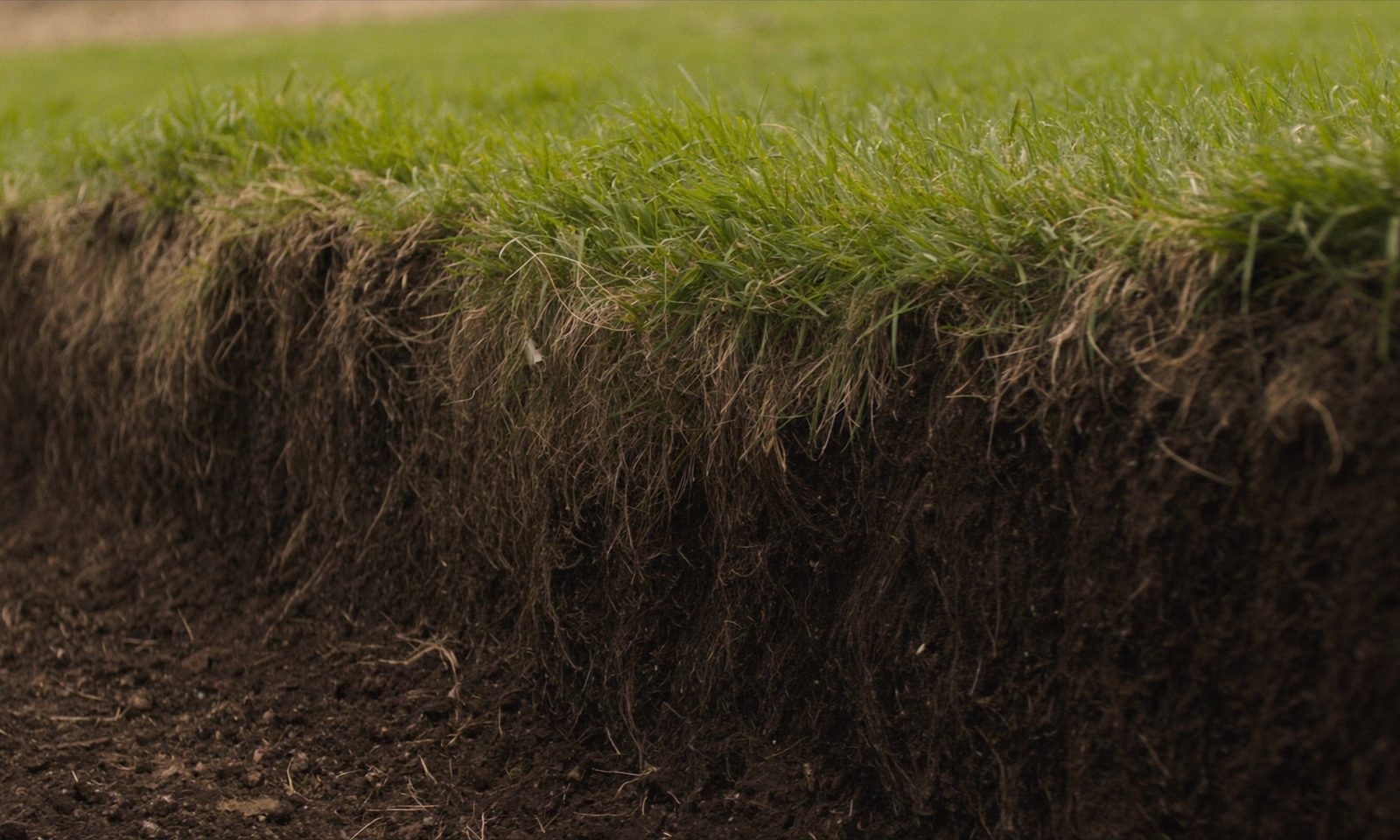
The same carbon compounds found in nutrient-rich soil. This is what we mean by bioavailable carbon.
The carbon Humequine works with is in neither hand. It is the carbon held in humic and fulvic acid, the same carbon compounds found in nutrient-rich soil, and it is what we mean by bioavailable carbon: Humequine fuels the growth of beneficial bacteria with bioavailable carbon. Why we think most rations are short of it, and what the evidence does and does not show in horses, belongs to Humic acid, fulvic acid, and carbon in equine gut health: Understanding the evidence. The ordinary side of the question, the fiber and the starch, is covered in What fuels the equine microbiome? Carbon, fiber, and microbial nutrition.
Acidity is part of fermentation, not automatically a problem
“Acid” sounds like something you want less of in a gut. But the fermentation products your horse runs on are fatty acids. Their presence is normal biology, not a warning sign.2
What matters is the process around them: what is being fermented, which products build up or get used, and how the conditions shift as a result.
Go back to the scoop of oats. In a laboratory model built from equine fecal communities, researchers added starch, the part of that scoop the small intestine may not finish, and watched what happened to lactate, an acid some bacteria produce and others consume. Different organisms in the same system responded in different directions, and some bacteria were identified specifically because they used the lactate others made. It was a benchtop experiment, not a feeding trial.10
What it does show is interaction. One microbial process changes the conditions for the next. Fermentation makes more sense as a set of connected activities than as a contest between “good” and “bad” organisms.
Hindgut pH in horses: Why fermentation conditions matter develops the subject, including what different measurements can and cannot show.
Water connects the digestive contents with the horse
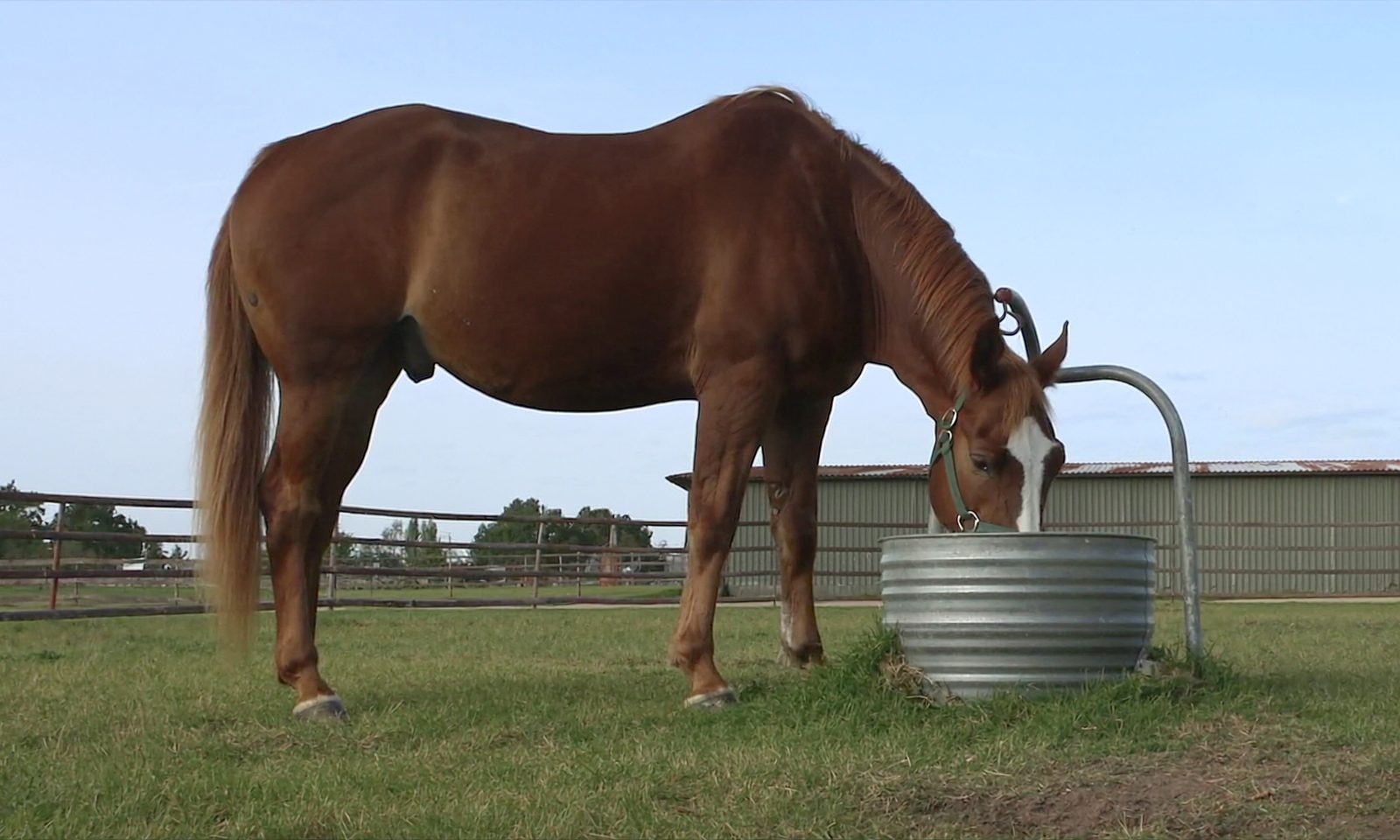
Digestion happens in fluid. Water comes in with drinking, with feed and with the horse’s own digestive secretions, and it is absorbed back along the tract. The hindgut is part of that recovery at the same time as it is fermenting.3
That is a more dynamic picture than water in at one end and manure out at the other. Water moves back and forth between the contents and the body all the way along.3
For an owner, this means a pile of manure is the last page of a long story. Its consistency reflects fiber, fermentation, water movement, the horse’s drinking and a dozen other things. It does not point at one organism, or tell you which chapter changed.
That is a boundary, not a reason to stop looking. What you see in the paddock becomes more useful the more accurately you describe it and the more you know about what was going on around the horse at the time.
How digestion connects to your horse’s energy, hydration, and body condition brings these relationships together at the level of the whole horse.
Understanding the biology behind Microbiome Management
The Microbiome Management Framework begins with the biological environment. Microorganisms work inside conditions shaped by what reaches them, by how acidic their surroundings are, and by how much water is moving through. Change the conditions and the community follows.
The Microbiome Management Framework
- Support the biological environment
- Support the microbiome
- Support Digestive Stability
- Support whole-body condition and resilience
Stage 1, inside the gut
What reaches the microbes
How acidic their surroundings are
How much water is moving through
The Framework brings those relationships into everyday care, and Digestive Stability, built daily, is the outcome it works toward.
In Microbiome Management for horses: A framework for Digestive Stability, we connect this biology to the wider care program. In Digestive Stability in horses: How to tell whether a change holds, we look at what a useful pattern over time looks like from the owner’s side of the fence.
Go back to that flake of hay. Your horse breaks it down as far as its own enzymes can take it, and its microbes take the fiber the rest of the way. How well they do that depends on the conditions around them, and those conditions are where we start. Humequine is Microbiome Management for Horses: it supports the environment that beneficial bacteria need. The bottle, the measure and the morning feed are in Where Humequine fits within a Microbiome Management program.
From Humequine
Humequine Digestive Stability Formula
A daily liquid concentrate formulated with humic and fulvic acid. Tasteless and odorless, it is added to feed or grain. Made in Canada, for horses only.
See the formulaThese statements have not been evaluated by the Food and Drug Administration. This product is not intended to diagnose, treat, cure, or prevent any disease.
Frequently asked questions
What is the equine microbiome?
The equine microbiome is the community of microorganisms living in a horse’s digestive tract, together with its genes and what it does. It includes bacteria, archaea, anaerobic fungi and ciliate protozoa. In the cecum and large colon, the fermentation regions of the hindgut, it breaks down the fiber the horse cannot digest itself and produces volatile fatty acids that the horse absorbs and uses for energy.
Can horses digest fiber on their own?
No. Their digestive enzymes cannot break the walls of plant cells, and hay is largely plant cell walls. That work belongs to the microorganisms living in the cecum and large colon, the fermentation regions of the hindgut. They take the fibrous material the horse cannot use and turn it into something it can.
What does the hindgut do in a horse?
The hindgut, the cecum and large colon, is where microorganisms ferment the fiber the horse cannot digest itself. Mixing and retention hold plant material in contact with them, and they produce volatile fatty acids that the horse absorbs and uses for energy. The hindgut also recovers water at the same time as it is fermenting.
What is the difference between the microbiota and the microbiome?
Microbiota means the organisms themselves. Microbiome means the community together with its genes and what it does. In the horse, that community is wider than bacteria: equine studies have also found archaea, anaerobic fungi and ciliate protozoa.
What are volatile fatty acids, and why do they matter to a horse?
Volatile fatty acids, also called short-chain fatty acids, are what gut microorganisms produce when they ferment fiber. The three that matter most in equine nutrition are acetate, propionate and butyrate. The horse absorbs them across the gut wall and uses them for energy, so a meaningful share of what a horse gets from forage is made by microbes and handed over.
What can a manure microbiome test tell you about your horse?
Manure is a sample from the last stop. Research mapping seven regions of the healthy equine tract (Ericsson and colleagues, 2016) found different communities from site to site, so a manure sample does not tell you what is happening in the stomach or the small intestine. A change in which bacteria are present is a description, not yet a result: look for whether digestibility, fermentation products or the horse itself changed too.
How quickly does a horse’s gut microbiome respond to a change in diet?
Quickly. In a New Zealand study (Fernandes and colleagues, 2014), yearling fillies moved from conserved forage and grain onto pasture had manure bacteria that came to resemble the pasture-fed horses’ within four days. Abrupt switches between grass and hay shifted the community in ponies too, even though both diets were forage. That is a reason to plan transitions, not a reason to treat grass as a threat.
Does starch reach a horse’s hindgut?
It can. The starch in grain is meant to be digested and absorbed in the small intestine, and what the small intestine does not finish travels on to the microbes in the hindgut. In a study of 30 horses (Harlow and colleagues, 2016), changing the starch source and the amount fed shifted the bacterial groups measured in manure, and corn and oats did not shift them the same way. Too much starch and sugar arriving at once is its own problem.
Is acidity in a horse’s hindgut a problem?
Not automatically. The fermentation products a horse runs on are fatty acids, so their presence is normal biology, not a warning sign. What matters is the process around them: what is being fermented, which products build up or get used, and how the conditions shift as a result.
What is bioavailable carbon?
At Humequine, bioavailable carbon means the carbon held in humic and fulvic acid, the same carbon compounds found in nutrient-rich soil. It is neither the fiber in hay nor the starch and sugar in grain, the two kinds of carbon most of a ration is made of. Humequine fuels the growth of beneficial bacteria with bioavailable carbon.
References
- University of Maryland Extension. Teaching Basic Equine Nutrition Part II: Equine Digestive Anatomy and Physiology. extension.umd.edu/resource/teaching-basic-equine-nutrition-part-ii-equine-digestive-anatomy-and-physiology
- Iowa State University Extension and Outreach. Synopsis of the Digestive Anatomy and Physiology of the Horse. www.extension.iastate.edu/equine/synopsis-digestive-anatomy-and-physiology-horse
- Malone E. Physiology review. In: Large Animal Surgery: Supplemental Notes. University of Minnesota. open.lib.umn.edu/largeanimalsurgery/chapter/physiology-review/
- Ericsson AC, Johnson PJ, Lopes MA, Perry SC, Lanter HR. A Microbiological Map of the Healthy Equine Gastrointestinal Tract. PLOS ONE. 2016;11(11):e0166523. doi.org/10.1371/journal.pone.0166523
- Edwards JE, Shetty SA, van den Berg P, and colleagues. Multi-kingdom characterization of the core equine fecal microbiota based on multiple equine (sub)species. Animal Microbiome. 2020;2:6. doi.org/10.1186/s42523-020-0023-1
- Fernandes KA, Kittelmann S, Rogers CW, and colleagues. Faecal Microbiota of Forage-Fed Horses in New Zealand and the Population Dynamics of Microbial Communities following Dietary Change. PLOS ONE. 2014;9(11):e112846. doi.org/10.1371/journal.pone.0112846
- University of Minnesota Extension. Understanding your hay analysis. extension.umn.edu/agriculture/animals-and-livestock/horse/understanding-your-hay-analysis
- Harlow BE, Lawrence LM, Hayes SH, Crum A, Flythe MD. Effect of Dietary Starch Source and Concentration on Equine Fecal Microbiota. PLOS ONE. 2016;11(4):e0154037. doi.org/10.1371/journal.pone.0154037
- Garber A, Hastie P, McGuinness D, Malarange P, Murray JA. Abrupt dietary changes between grass and hay alter faecal microbiota of ponies. PLOS ONE. 2020;15(8):e0237869. doi.org/10.1371/journal.pone.0237869
- Biddle AS, Black SJ, Blanchard JL. An In Vitro Model of the Horse Gut Microbiome Enables Identification of Lactate-Utilizing Bacteria That Differentially Respond to Starch Induction. PLOS ONE. 2013;8(10):e77599. doi.org/10.1371/journal.pone.0077599
This article is for education and is not veterinary or medical advice. If you have a significant concern about your horse, talk to your veterinarian or an equine nutritionist.